-1.png?height=120&name=1f83348385b37474578a1d1ffd78b3c8adef03e0%20(1)-1.png)
Last Updated: Jan 22, 2025
Table of Contents
- Item Unit Price Exception Type
- Checking the Bill Item's Unit Price
- Reviewing a Unit Price Issue
- Updating an Order Item's Price to Match the Bill
- Resolving a Unit Price Exception
- Leaving a Unit Price Exception
- Disputing a Unit Price Exception
Bill exceptions appear on bills as part of the 3-way match process to ensure the bill matches with the order and receipt to make sure you aren't overpaying for items you've ordered. The Item Unit Price Exception Type appears when a bill item’s unit price is greater than the linked order item’s unit price. There are several ways to address the issue depending on the scenario.
Item Unit Price Exception Type
The Item Unit Price exception type occurs when the bill item's unit price is greater than the order item's unit price.
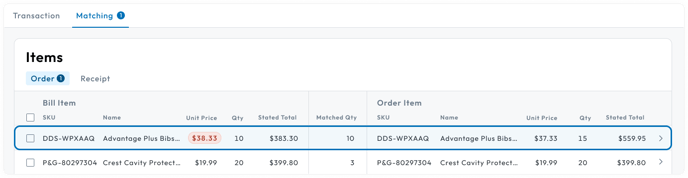
It is displayed on the Matching Tab under the Order section with an error badge around the bill item’s unit price.
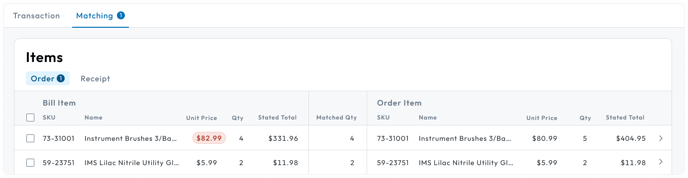
When a bill item is linked to an order item, the unit prices are compared to each other. Depending on the variance between the prices, the following scenarios will occur:
- If the unit price on the bill is greater than the unit price on the order, a unit price exception is thrown.
- If the unit price on the bill is less than or equal to the unit price on the order, there is no unit price exception.
Some reasons why the bill item's unit price might be different from the order item's unit price are:
- The unit price in your price book is out of date
- The item was ordered off-catalog and the unit price was entered incorrectly
The vendor is using their normal unit price instead of your agreed upon discounted unit price
Checking the Bill Item's Unit Price
Sometimes, the bill item's unit price can be transcribed incorrectly from the bill. First, check to make sure the bill item's unit price matches the unit price that appears on the attachment.
To compare the unit price on the transcribed bill item to the unit price of the item on the attached document, follow the steps below.
- Click on the Attachments icon on the right drawer.
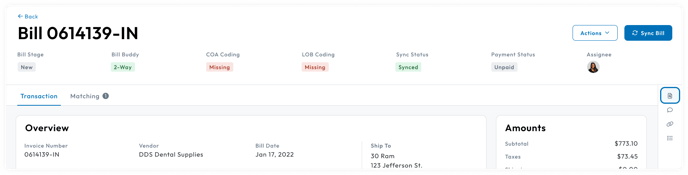
- The Attachment drawer will open.
- Compare the unit price of the item in the attachment to the unit price of the transcribed item.
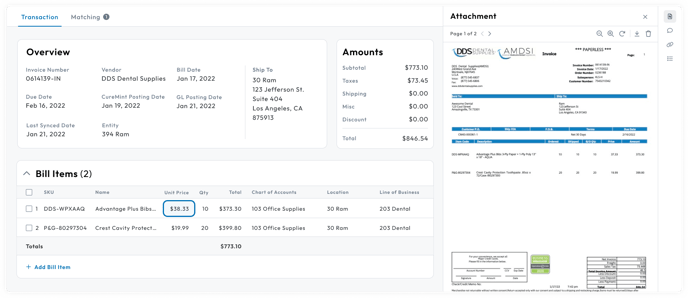
If the unit prices match, move on to the next section. If the transcription of the unit price is inaccurate, follow the steps below to update it.
- Make sure you are under the Transaction tab of the bill page.
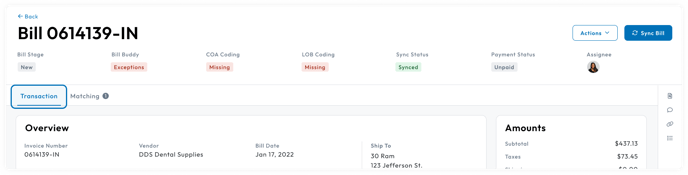
- Go to the Bill Items table and find the bill item.
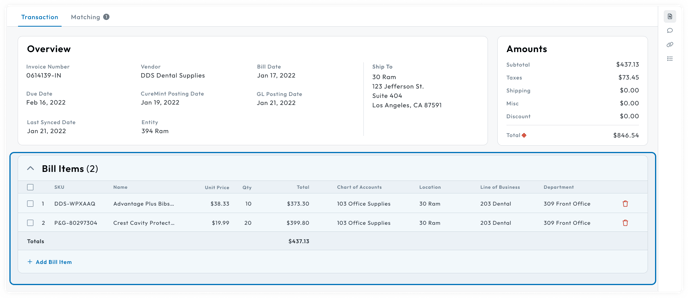
- Update the unit price of the bill item in the table.
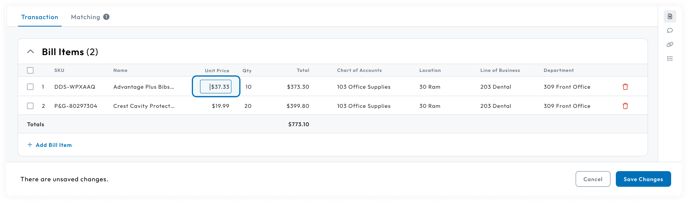
- Click the Save button in the bottom footer.
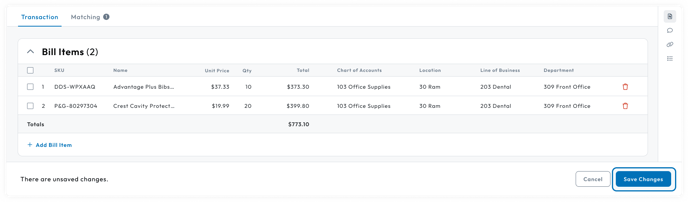
Go to the Matching tab and find the bill item to see if the Unit Price Exception has been resolved.
- If the Exception tag on the bill item’s unit price is gone, the bill item's unit price is now less than or equal to the order item's unit price and no other exceptions exist.
- If the Exception tag on the bill item’s unit price is still present, follow the steps for reviewing a unit price issue.
Reviewing a Unit Price Issue
It's important to view the unit price variance between the bill item and the order item to ensure you don't overpay the vendor. To review the unit price exception:
- Go to the Matching Tab
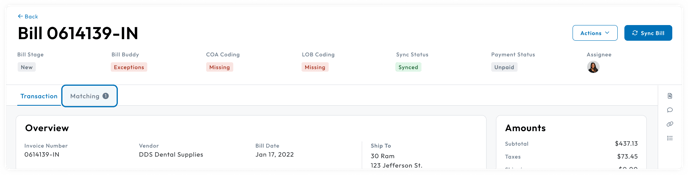
- Click on the Bill Item’s row under the Order Tab
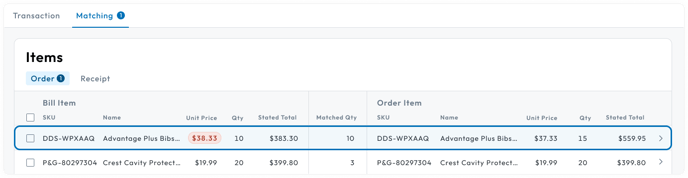
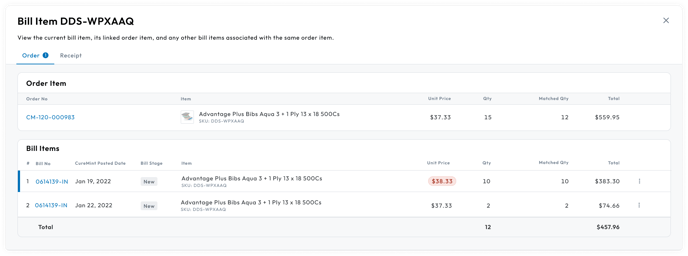
- The Bill Item Detail Modal will appear
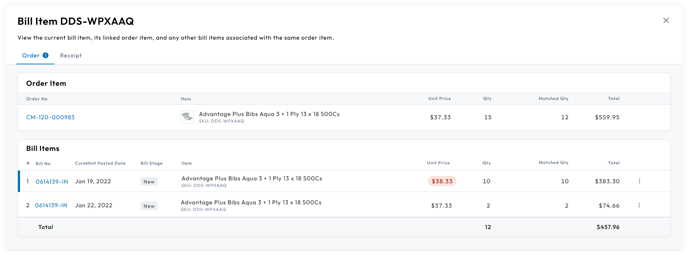
- The modal lists all bill items in order of the bill’s created date that are connected to the linked order that have a bill item connected to the same order item of the current bill item that has the unit price issue.
After viewing the variance in unit price, ask yourself the following questions to determine if the bill item's unit price is incorrect:
- Do I have an agreed upon formulary price for this item with this vendor?
- If so, is the unit price on the bill the agreed upon price?
- Was the item ordered off-catalog on the order?
- If so, was the price entered correctly on the order?
After viewing the variance in unit price, ask yourself the following questions to determine if the bill item's unit price is incorrect:
- Do I have an agreed upon formulary price for this item with this vendor?
- If so, is the unit price on the bill the agreed upon price?
- Was the item ordered off-catalog on the order?
- If so, was the price entered correctly on the order?
If you determine the unit price on the order is incorrect and the unit price on the bill is correct, you should update the order item's price to match the bill.
If you determine the unit price on the bill is incorrect or are unsure, then determine how you want to proceed based on the variance of the unit price. The variance will always be visible on the Unfavorable Item Variance Report for when you want to bring up the issue with the vendor.
- If the variance is small enough that you don't mind paying the bill and disputing the overcharge later, determine how you want to proceed based on the importance of obtaining a 2-way or 3-way match in your organization.
- If a 2-way or 3-way match is important, follow the instructions for resolving a unit price exception.
- If a 2-way or 3-way match is not important and you want to keep visibility into the exception, follow the instructions for leaving a unit price exception.
- If the variance is large enough that you want to withhold payment from the vendor and dispute the bill, follow the instructions for disputing a unit price exception.
Updating an Order Item's Price to Match the Bill
If you determine that the unit price on the bill is correct and the unit price on the order was incorrect, you can update the unit price on the order to match the bill.
| Pros | Cons |
|
|
Please Note: If you update the order item's unit price, the exception will be resolved and the variance in pricing will NOT be visible on the Unfavorable Item Variance Report.
To update the order item's price:
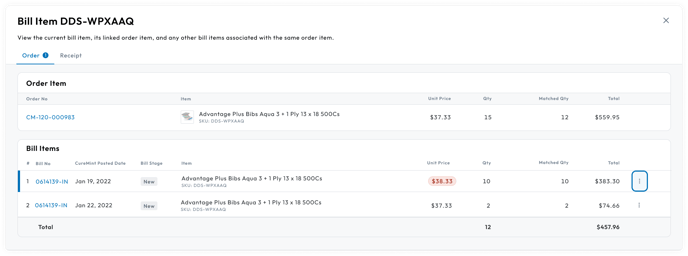
- Click on the Bill Item’s row under the Order Tab
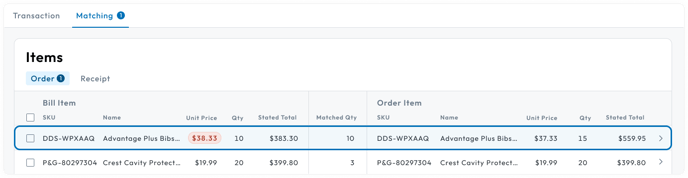
- The Bill Item Detail Modal will appear
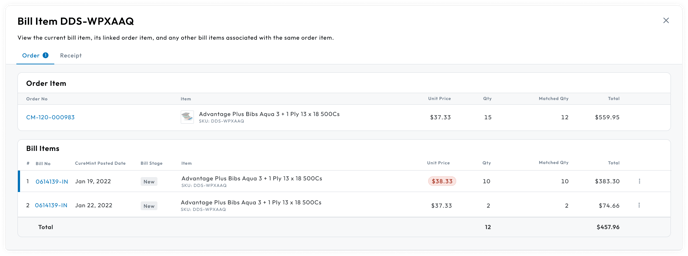
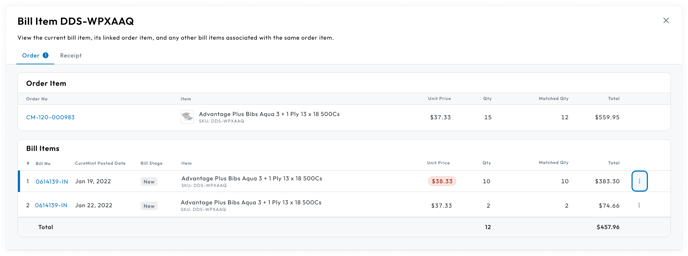
- Click on the Menu icon in the Bill Item’s table row
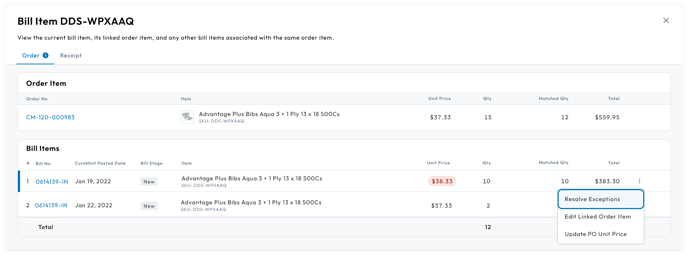
- Select the Update PO Unit Price option
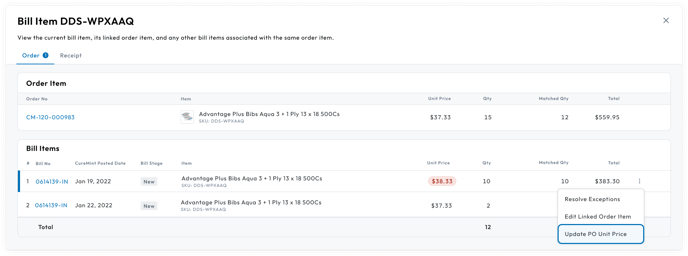
- The associated order item's unit price is updated to the unit price of the bill item, the order item's total is recalculated, and the exception algorithm is rerun.
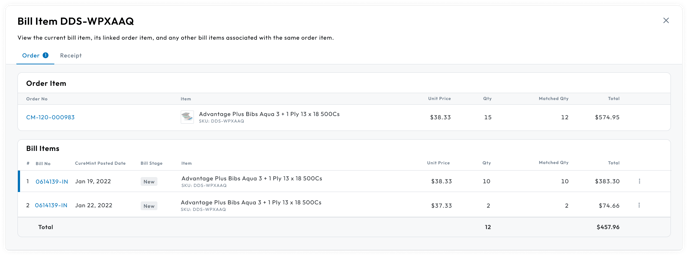
Clicking the Update PO Unit Price button will only update the associated order with the bill. It will not:
- Update the unit price for the item in the price book
- Update the unit price for the item on other bills it appears on
- Update the unit price for the item on other orders it appears on
Resolving a Unit Price Exception
Resolving the item removes it from the 3-way matching algorithm which removes it from having any exceptions. This option should only be used if you are fine with paying the bill and potentially talking to the vendor about the issue later. The variance will be visible on the Unfavorable Item Variance Report for when you want to bring up the issue with the vendor.
Please Note: If there are other exceptions on the bill item, look into those first before resolving the item. Resolving the item will remove all exceptions associated with it.
If there are no other exceptions on the bill, the bill should be moved into the approved bill stage. This option should only be used if:
- You are fine with paying the variance in pricing now and bringing it up with the vendor at a later time
- Need to get a 2-way or 3-way match on the bill
- Want the variance to appear on the Unfavorable Item Variance Report
| Pros | Cons |
|
|
To resolve the item:
- Click on the Bill Item’s row under the Order Tab
- The Bill Item Detail Modal will appear
- Click on the Menu icon in the Bill Item’s table row
- Select the Resolve Exceptions option
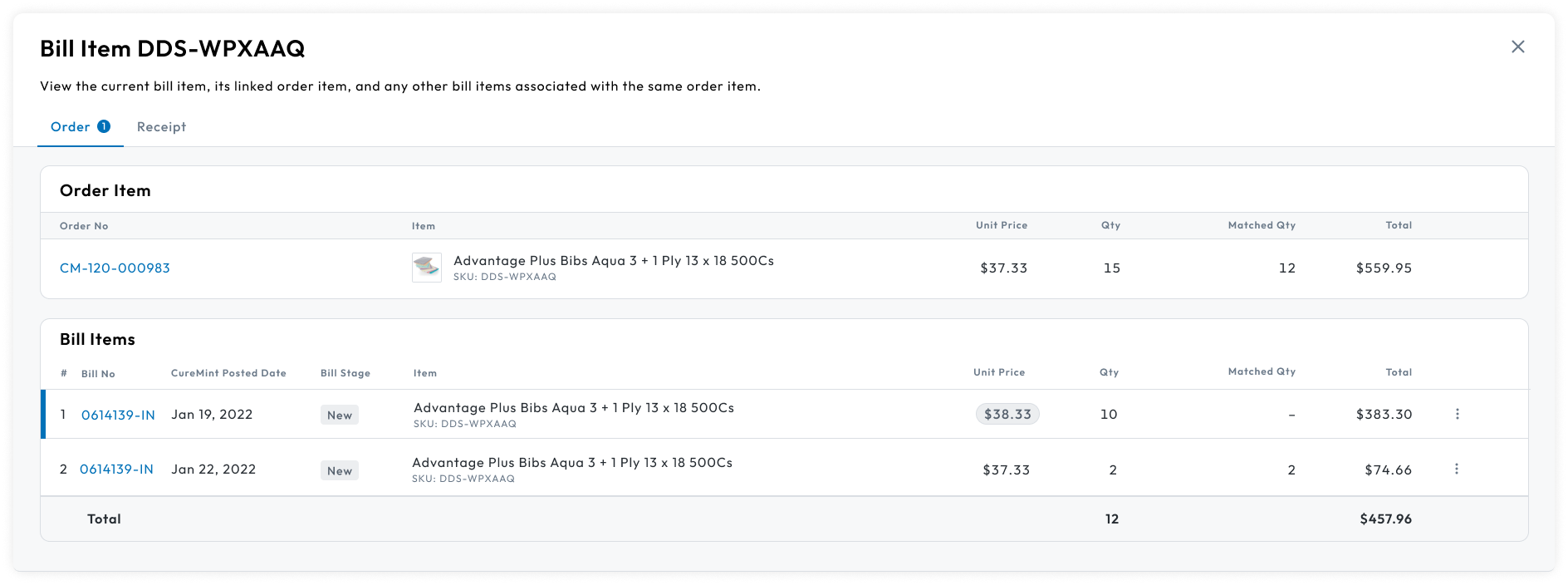
- The exceptions are resolved and the matched quantity is removed. Exceptions will appear in a neutral tag to indicate there was an exception that was resolved.
Leaving a Unit Price Exception
Leaving the exception keeps the exception tag visible on the bill. This option should only be used if you are fine with paying the bill and potentially talking to the vendor about the issue later. The variance will be visible on the Unfavorable Item Variance Report for when you want to bring up the issue with the vendor. If there are no other exceptions on the bill, it should be moved into the approved bill stage. We recommend leaving a comment on the bill about why an exception is still present if choosing this method. This option should only be used if:
- You are fine with paying the variance in pricing now and bringing it up with the vendor at a later time
- Don't need to get a 2-way or 3-way match on the bill
- Want to keep visibility into the exception
- Want the variance to appear on the Unfavorable Item Variance Report
| Pros | Cons |
|
|
Disputing a Unit Price Exception
Disputing the item should be done if the variance is above your accepted limit. The bill should be moved to the blocked bill stage while talking with the vendor. We recommend leaving a comment on the bill about why the bill is in the blocked stage if choosing this method.
| Pros | Cons |
|
|
This article is used for documentation feedback only. For more help email help.me@curemint.io