-1.png?height=120&name=1f83348385b37474578a1d1ffd78b3c8adef03e0%20(1)-1.png)
Last Updated: Jan 22, 2025
Table of Contents
- Item Not Linked Exception Type
- Checking the Bill Item SKU
- Comparing a Bill Item to Order Items
- Linking a Bill Item to an Order Item
- Addressing a Bill Item that's not on the Order
Bill exceptions appear on bill items as part of the 3-way match process to ensure the bill matches with the order and receipt to make sure you aren't overpaying for items you've ordered. The Item Not Linked Exception Type appears when a bill item cannot be automatically associated with an order item. There are several reasons why a bill item can’t be automatically linked to an order item, and it’s important to check the order to ensure there isn’t a match. If the bill item does appear on the order, it can be easily linked to the order item. If the bill item is not on the order, there are several ways to address the issue depending on the scenario.
Item Not Linked Exception Type
The Item Not linked exception type occurs when a bill item is unable to be automatically associated with an order item during the transcription process.
It is displayed on the Matching Tab under the Order section with an error badge under the Order Item column.
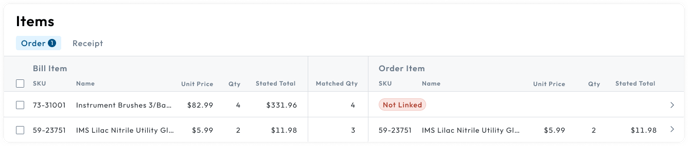
When a bill is transcribed, the following process occurs:
- The bill item is checked for a SKU.
- If there is a SKU on the bill item, the system tries to find that SKU on the list of order items on the connected order that is an exact match.
- If there is an exact match for the SKU on the order, the bill item is automatically linked to the order item.
- If there is not an exact match for the SKU on the order, the bill item remains unlinked.
There are several reasons why a bill item SKU might not be found on the order. Some common examples are:
- The vendor formats their SKUs differently on bills
- The vendor sent a different item than what was originally ordered
- There was an incorrect SKU from the vendor on the bill
- The vendor sent a complimentary item
Checking the Bill Item SKU
Sometimes, the bill item SKU can be transcribed incorrectly from the attachment. To compare the SKU on the transcribed bill item to the SKU of the item on the attached document, follow the steps below.
- Click on the Attachments icon on the right drawer.
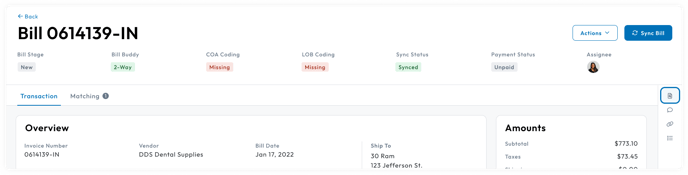
- The Attachment drawer will open.
- Compare the SKU of the item in the attachment to the SKU of the transcribed item.
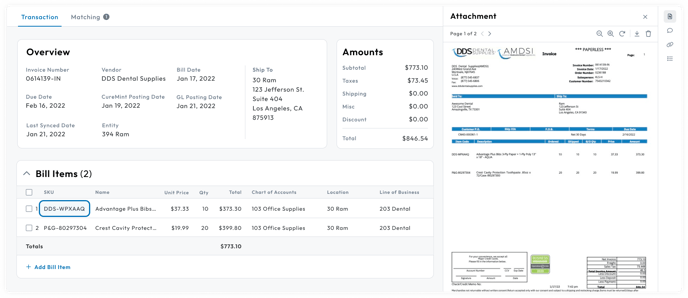
If the SKUs match, move on to the next section. If the transcription of the SKU is inaccurate, follow the steps below to update it.
- Make sure you are under the Transaction tab of the bill page.
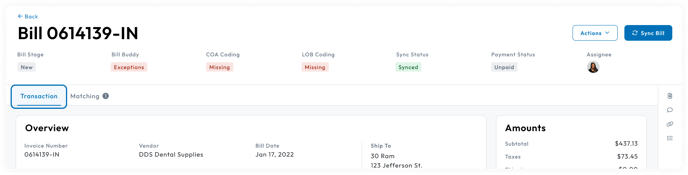
- Go to the Bill Items table and find the bill item.
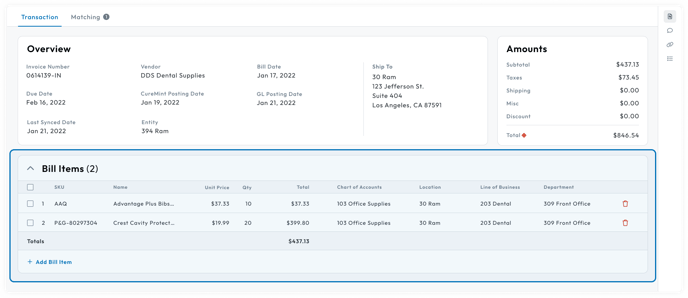
- Update the SKU of the bill item in the table.
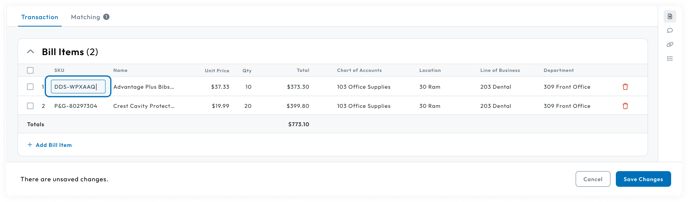
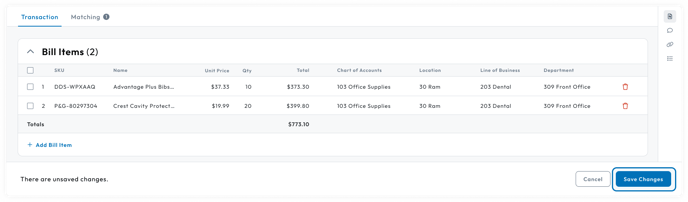
- Click the Save button in the bottom footer.
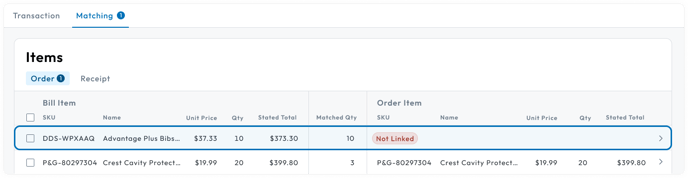
Go to the Matching tab and find the bill item to see if it still has exceptions.
- If the Item Not Linked error badge is gone, the bill item is now linked to an order item.
Please Note: Linking a bill item to an order item can cause other exception types. If a Unit Price, Quantity, or Total exception type is now present, follow the steps in the linked articles to address them.
- If the Item Not Linked error badge is still present, follow the steps for comparing a bill item to an order item.
Comparing Bill Item to Order Items
An unlinked bill item will have the Item Not Linked exception type under the Order Item column in the Order section of the Matching tab.
To determine if the item is on the order:
- Click on the table row of the bill item with the Item Not Linked exception.
- The Link Bill Item modal will appear. At the top it will have the selected bill item. Underneath the bill item will be a list of all of the order items on the connected order.
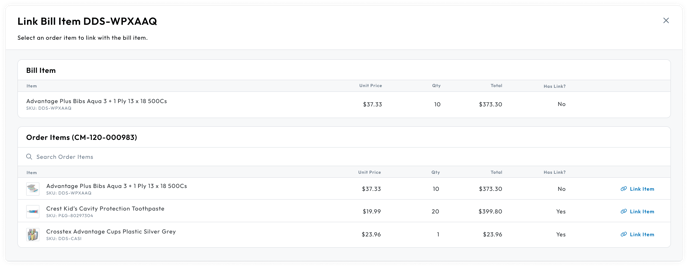
The information available for the order items are:
- Item: The item's image, description, and SKU.
- Quantity: The amount of the product that was ordered.
- Price: The unit price of the product that was ordered.
- Total: The total amount the item cost on the order.
- Has Link?: Indicates if the item is already linked to a bill item on the current bill.
Using the information from the bill item, ask the following questions to determine if the bill item is able to be linked to an order item.
- Does the bill item SKU match an order item SKU with different special characters?
Examples:
| Bill Item SKU | Order Item SKU |
| 12-34-56 | 123456 |
| 12.34.56 | 123456 |
- Does the bill item SKU match an order item SKU but have additional characters?
Examples:
| Bill Item SKU | Order Item SKU |
| 123456-07 | 123456 |
| 07-123456 | 123456 |
| A-123456 | 123456 |
| 123456-A | 123456 |
If the answer is no to any of the above scenarios, follow the steps for addressing a bill item that's not on the order.
If the answer is yes to any of the above scenarios, ask the following questions to determine if you want to link the items together.
- Is the bill item's description similar to the order item's description?
- Is the bill item's unit price similar to the order item's unit price ?
If the answer is yes to all of the questions above, the bill item should be linked to the order item. Follow the instructions for linking a bill item to an order item.
If the answer is no to any of the above questions or you are still unsure, follow the steps for addressing a bill item that's not on the order.
Linking a Bill Item to an Order Item
If you determine there is a match for the bill item on the order, click the Link Item button next to the order Item in the Link Bill Item modal.
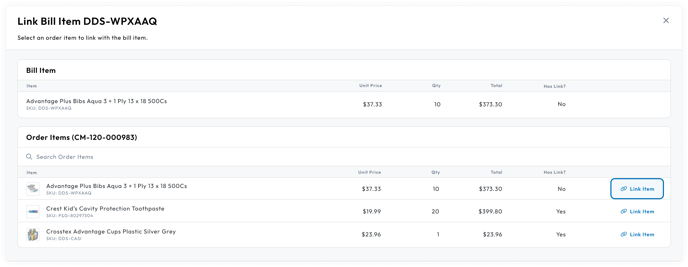
This links the bill item to the order item. Checks are then run to see if there are any other exceptions between the unit price, quantity, and total between the two items. If any of those exceptions appear, follow the steps on the linked articles to fix them. If no new exceptions appear for the item on the table, the bill item matches the order item and there are no further exception types to address.
Addressing a Bill Item that's not on the Order
Sometimes a bill item can't be linked with an order item. Some common reasons this can occur are:
- The bill item is free and has been added on as a complimentary item
- The original item is out of stock and has they have sent a replacement item
- The vendor mixed up the SKU and sent the incorrect item
Each scenario is listed below with ways on how to address the issue along with pros and cons of each solution.
Complimentary Item
Sometimes a vendor will add on a complimentary item to the order that has a total of $0. These items typically won't be on the original order, so they won't have an order item to be linked to. The option to address this issue is leaving the exception.
Leave the Exception
Leaving the exception keeps the exception tag visible on the bill and allows the user to track approved and completed bills that still have exceptions. We recommend leaving a comment on the bill about why an exception is still present if choosing this method.
| Pros | Cons |
|
|
Replacement Item
If an item on the original order is out of stock or on backorder, sometimes vendors will send a similar item in its place. Since they are different items, they will have different SKUs and won't be automatically linked. The options to address this issue are linking the items, leaving the exception, or disputing the item.
Link the Items
If you know a bill item is a replacement item for an order item, you can link the two items together to indicate the replacement.
| Pros | Cons |
|
|
To link the bill item to an order item:
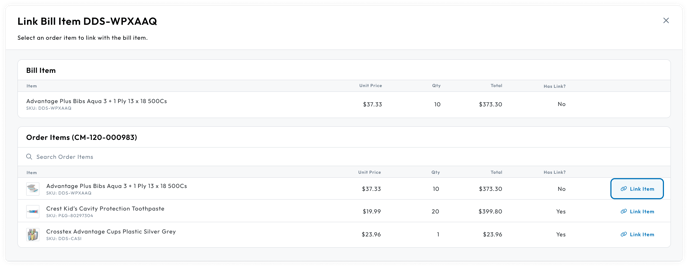
- Click the Link Item button next to the order item in the Link Bill Item modal.
Leave the Exception
Leaving the exception keeps the exception badge visible on the bill. This option should only be used if you are fine with paying the bill and potentially talking to the vendor about the issue later. If there are no other exceptions on the bill, it should be moved into the approved bill stage. We recommend leaving a comment on the bill about why an exception is still present if choosing this method.
| Pros | Cons |
|
|
Dispute the Replacement
Disputing the replacement should be done if you need to discuss the replacement with the vendor before paying the bill. The bill should be moved to the blocked bill stage while talking with the vendor. We recommend leaving a comment on the bill about why the bill is in the blocked stage if choosing this method.
Some reasons to dispute the replacement are:
- The unit price variance between the bill item and order item are above your acceptable variance.
The bill item is not a comparable replacement for the order item
| Pros | Cons |
|
|
Incorrect Item
If the SKU and item description don't match anything on the original order, the vendor probably billed you for the incorrect item. This can occur if they enter the SKU incorrectly on their end when receiving the order or when creating the bill.
Common errors are:
- 2 numbers on the original PO item have been swapped on the bill item. For example, order item 1234 and bill item 1243.
- 1 number on the original order item is incorrect on the bill item. For example order item 1234 and bill item 1235.
- The item has an extension where the original item did not. For example order item 1234 and bill item 1234-05.
If the descriptions and unit prices for these items are off, chances are one of the above errors has occurred. The options to address this issue are leaving the exception or disputing the item.
Leave the Exception
Leaving the exception keeps the exception tag visible on the bill. This option should only be used if you are fine with paying the bill and potentially talking to the vendor about the issue later. If there are no other exceptions on the bill, it should be moved into the approved bill stage. We recommend leaving a comment on the bill about why an exception is still present if choosing this method.
| Pros | Cons |
|
|
Dispute the Item
Disputing the item should be done if you need to discuss the price with the vendor before paying the bill. The bill should be moved to the blocked bill stage while talking with the vendor. We recommend leaving a comment on the bill about why the bill is in the blocked stage if choosing this method.
| Pros | Cons |
|
|
This article is used for documentation feedback only. For more help email help.me@curemint.io